About Me
01About Me
How a Bench Notebook Became a Website
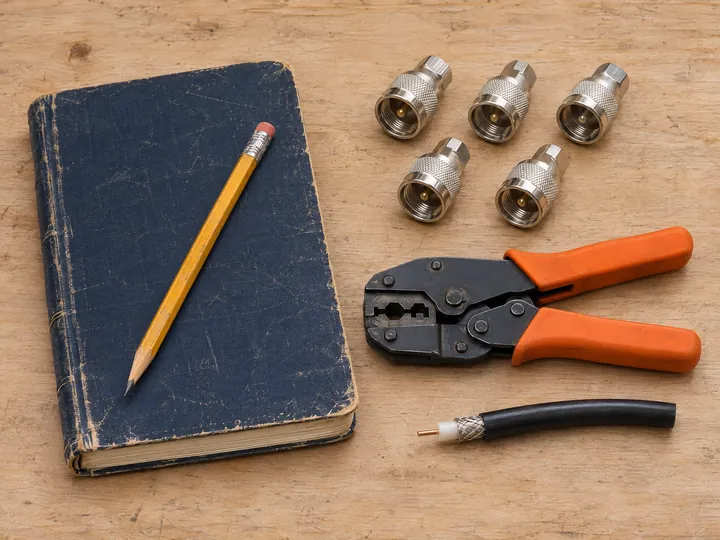
IMPAQ MSN started life as a folder stuffed with hand-drawn link budgets and photos of connectors I'd crimped badly. The students who tagged along on my site visits kept asking to borrow it, so one winter I typed the whole mess up, double-checked the arithmetic, and put it online where they could find it.
The name says what it does. MSN is short for Mobile Signal Network, and I hold the site to that promise: the antennas that haul mobile signal around, the Wi-Fi kit that shares it through a building or across a valley, and the specialty antennas stitching satellites, sensors and vehicles into the wider network.
Radio engineering students come first here. Technician, ham, homeowner with a dead spot in the kitchen - you're welcome too. The math doesn't care who's holding the pencil.
02Meet Jill
I'm Jill
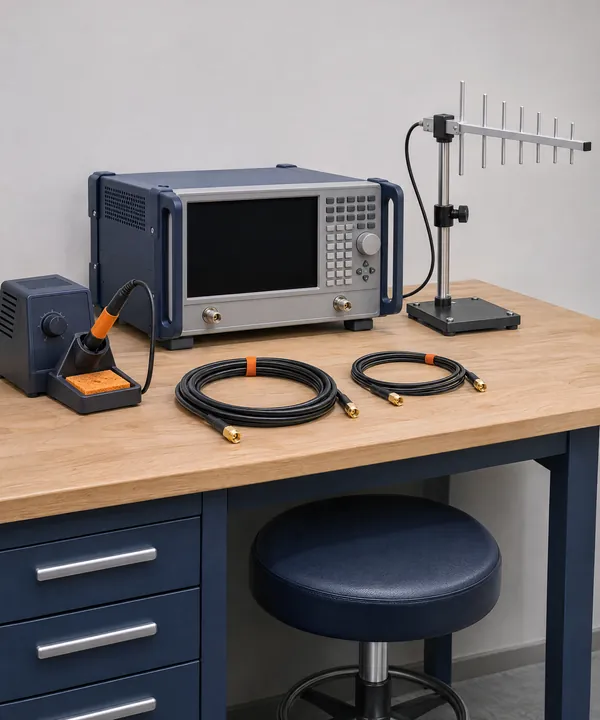
Radio engineer, by trade and by temperament. My working life splits between a laptop crowded with propagation plots and a ladder propped against somebody's chimney. I've swung Yagis into place in horizontal rain, swept feeders on a network analyzer past midnight, and gone a few rounds with installers convinced the pricier antenna had to be the better one. It wasn't.
What pulls me back every time is the instant the roof and the numbers agree. Run the link budget, clear the Fresnel zone, torque every connector to spec, and the modem reads out exactly what the sums said it would. Twenty years in, that still gets me.
This site is a one-woman operation, so every page here is my opinion. A few of them are loud ones. Each one arrives with the working shown.
- Name
- Jill
- Role
- Radio Engineer
- On this site
- Webmaster
03Values
My Rules for Teaching RF
01
Working Shown, Always
Hand somebody a bare number and they learn nothing, so every figure here ships with the sum that produced it.
02
Count Every Decibel
Lose three decibels and half your power is gone, yet spec sheets gloss right over it. That's the reason I tally each one.
03
Believe the Meter, Doubt the Brochure
A gain figure in a datasheet is where the conversation starts. A measured pattern or a VNA sweep ends it.
04
Keep the Blunders In
My own mistakes stay in the write-ups. One cable I crushed years back taught me more than any textbook chapter ever did.
04Sources
The References Behind the Numbers
Every definition and formula on this site traces back to something in this pile. Students: bookmark them now and thank me at exam time.
- IEEE Std 145-2013The official antenna vocabulary, useful whenever two textbooks quarrel over the meaning of gain.
- ITU-R P.525The free-space attenuation formula underneath the path loss calculator.
- ITU-R P.530Terrestrial line-of-sight planning methods, Fresnel clearance included.
- ITU-R P.526Diffraction over hills, ridges and rooftops, for the day your link has no clean path.
- 3GPP TS 36.214 and TS 38.215LTE and 5G NR measurement definitions, RSRP and RSRQ among them.
- IEEE 802.11The Wi-Fi standard family, from the elderly 2.4 GHz amendments up through Wi-Fi 7.
05Readers
Who Belongs Here
Second-years shaking hands with the Smith chart for the first time, final-years roughing out a capstone link, interns handed a ladder before they're handed a badge. Sound like you? Pull up a chair.
The pages stack on top of each other, so begin with the three antenna families, park the glossary in a second tab, and reach for the calculators any time a number in the text makes you squint.
Ask Me Something
Go on, send it. The good questions grow into blog posts, your name withheld unless you'd like the credit.