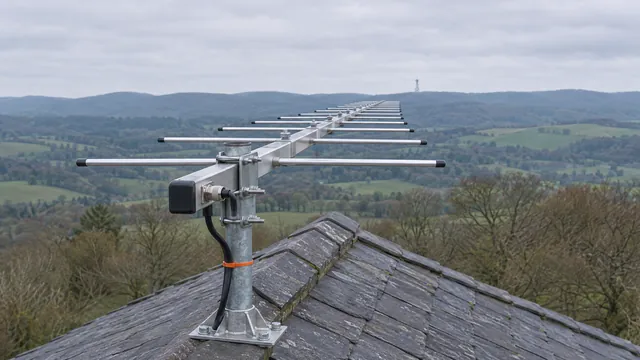
Treat the aim like it matters, or shrug and move on. That single fork in the road trips up more newcomers than any datasheet ever did, and I've lost count of the afternoons I've watched people wrestle a mast around when a cheap omni would have solved their problem before lunch. So here's the deal: read this through and you'll walk away knowing when exactness pays and when it's pure performance. Dorm, bench, rainy field exercise with a soggy manual, doesn't matter one bit. The reasoning travels.
Vocabulary first, so the rest doesn't sound like noise
Beamwidth describes the angular wedge where an antenna emits anything worth using. Tight beam, concentrated signal, flashlight versus bare bulb. Gain counts how much that concentration lifts your signal in the preferred direction, quoted in dBi, and it always takes a bite out of the pattern somewhere else.
Front-to-back ratio measures how well your antenna tunes out whatever happens behind it. Sidelobes are those pesky energy leaks spraying where you never asked them to, and trust me, one of them will grab a reflection you wanted nothing to do with.
Then there's the line-of-sight question, and it decides nearly everything. A clean visual path to a tower behaves nothing like a signal that ricochets off three buildings and a delivery van on its way to your receiver. Polarization must agree between both ends or you'll bleed signal for reasons no spec sheet will explain to you. And cable loss. Oh, cable loss. Bolt a lovely high-gain antenna onto twelve feet of bargain coax with a wobbly connector and the signal is gone for good.
What pointing actually buys you
The bargain, stated flat: gain up, beam down, range up, tolerance down. Spray energy everywhere and you fill a room evenly but weakly. Squeeze it tight and you can push a signal for kilometers, assuming you aimed right, and that assumption carries real weight.
My rule of thumb, the one I hand to everyone who asks: aim for signal, spread for coverage.
Laser mode: narrow, deliberate, unapologetic
Plenty of scenarios all but demand a directional antenna. Long rural hops where the tower squats eight kilometers off across a valley. Point-to-point Wi-Fi bridges linking two campus buildings. Packed spectrum where you want to reject the loudmouth next door instead of drowning in it. Low-power GPS and IoT gear where each decibel of link budget matters, because the transmitter whispers to begin with.
On the mobile signal side, 4G, 5G, LTE, GSM, grab a Yagi or panel when you know precisely where the serving tower lives and it plans to stay put. For Wi-Fi, directional earns its keep outdoors on a fixed bridge, or indoors when you need to punch a signal through one particular wall into one particular room. Specialty antennas, patch or high-gain designs, excel where precise reception outranks convenience, vehicle telemetry, a GPS receiver hungry for a clean view of sky.
Aiming itself is method, never mysticism. Locate the target first, with a cell ID app, a tower location database, or whatever the campus IT crowd surrenders when you ask sweetly. Sweep wide to land in the general area, then shave your adjustments down to a degree or two once you're near, because narrow beams punish lazy aim without mercy. Elevation and polarization count too, a gorgeous azimuth with the wrong tilt remains a dud. And crank that mount tight when you're happy, since wind votes on these things.
You've succeeded when RSSI or SNR climbs steadily through the sweep and then settles instead of jittering, and when a throughput test holds steady speeds with minimal retransmission. A lucky spike that dies the instant a leaf drifts by does not count.
Wing it: the underrated art of spreading energy
Omnidirectional coverage earns its keep constantly. Vehicles, boats, anything that rolls and refuses to re-aim at every corner. Small apartments and classrooms where devices perch in every direction at once. Dense urban blocks where multipath ricochets off every surface a city offers, which makes a narrow beam about as handy as a kaleidoscope. Emergency deployments and pop-up events, where nobody budgets time for a survey.
Mobile signal boosters in moving vehicles more or less demand omni design, since the serving cell swings around with every turn. Indoor Wi-Fi almost always wants omni unless you're bridging two fixed points on purpose. IoT mesh nodes lean toward broad reception too, since they gossip with neighbors in every direction at once.
The upside sits right there: simpler install, forgiving placement, cheap in money and patience alike. The downside sits right next to it: shorter range, and softer skin against whatever noisy gadget happens to live next door. Omni has failed you once the connection turns flaky at the coverage edge, or throughput crawls despite the access point supposedly being nearby. That's your invitation to consider a directional retrofit.
Tools worth having, and nothing flashier
Begin cheap. A smartphone signal app, a basic compass, maybe a USB spectrum dongle that costs less than a textbook. Graduate to a handheld spectrum analyzer or a dedicated antenna alignment meter when the hobby turns serious, and keep a GPS unit around for pinning down tower locations instead of squinting at a map.
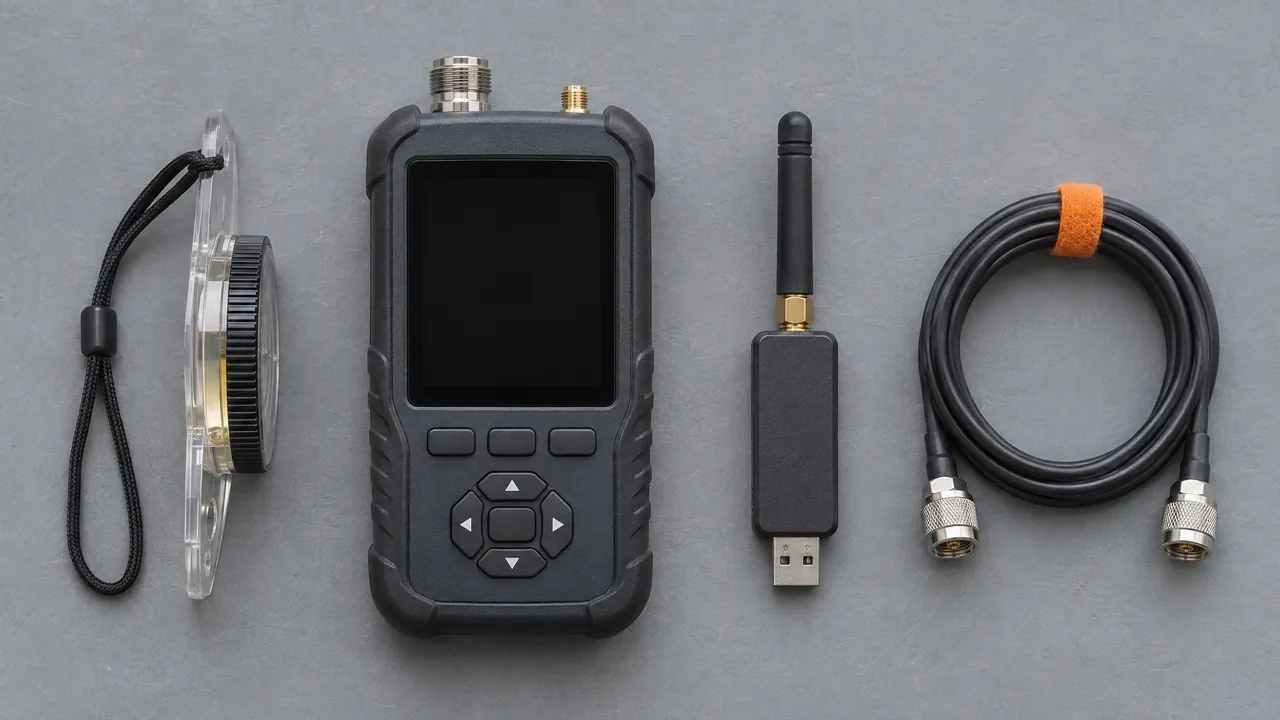
Mounting deserves more respect than it gets. Ground everything properly, torque your connectors rather than hand-tightening and praying, and cut coax runs as short as sanity allows, since every spare foot nibbles at your gain in silence. Read up on RF exposure guidance and local zoning rules before anything gets bolted to a roof, because a mid-semester visit from a city inspector ranks low on anyone's wish list.
Blunders I keep running into
Pointing vaguely "over yonder" and hoping for miracle range, when five degrees of error on a narrow beam can gut the signal outright. Forgetting polarization, a fix so easy it's literally a ninety-degree rotation, and somehow still forgotten weekly. Mounting a splendid high-gain directional on hardware so flimsy the first gust realigns it for free. And confusing a strong reflection with true line-of-sight, which sends you chasing a phantom that evaporates the moment conditions shift.
A decision path you can follow anytime
Does the device stay put? If no, omni, and stop agonizing. If it's fixed, ask yourself: does the link demand serious distance or rock-solid reliability? Do you know the target's direction and elevation with any confidence? If no, run a survey instead of aiming blind. Is the environment swimming in reflections and rival signals? Then omni or a diversity setup frequently beats a narrow beam anyway. Genuinely torn and the thing moves? Omni, default. Fixed and far? Aim.
Two myths to retire before you repeat them
Higher gain is never automatically better; it's better only if you can aim the thing with some skill, otherwise you've engineered a very directional method of missing. And omnidirectional does not mean a flawless 360-degree bubble. Real patterns carry dips and nulls, and your apartment's walls will layer on their own mischief no matter what the spec sheet promised.
The skimmer's summary
Aim when the setup stays fixed, distance runs long, or interference needs rejecting. Wing it when things move, when multipath rules the environment, or when you need it working ten minutes ago. Start with a phone app and a compass, then graduate to a spectrum analyzer once you're hooked.
Where this road leads next
Try my favorite lab assignment: measure RSSI at five-degree increments through a full rotation with a directional antenna, plot the results, and watch the beamwidth emerge from data you gathered yourself.
Aim smart rather than angry, and remember that antennas are shy animals: be exacting when they're narrow, generous when they need to hug the whole room.