There he is at the whiteboard, chest out, announcing that his beamforming simulation knocked two milliseconds off latency, and yes, he expects applause. Get used to that energy. Antennas sound like the dullest corner of electrical engineering until you grasp that they're the reason your TikTok loads mid-scroll, and knowing where the field is going might land you a job or, at minimum, a great anecdote for your next lab report.
Why antennas still run the show
An antenna is part ear, part megaphone, and it swaps between those jobs thousands of times per second without missing a beat. It catches whispers of signal buried under noise, then throws your data back out with exactly the right shape and direction. Pull the antennas out and the most advanced 6G chipset on the planet becomes a brick.
6G: the hype, the physics, and the stuff your professor won't stop explaining
People toss "6G" around as if it's already stocked at the electronics store. It isn't. What's actually happening is a push into sub-terahertz frequencies, plus experiments with visible light communication, bands sitting so far up the spectrum that they act more like focused beams of light than the sloppy radio waves we grew up with. All that extra spectrum buys staggering capacity. The catch is brutal: these waves barely travel and a sneeze blocks them.
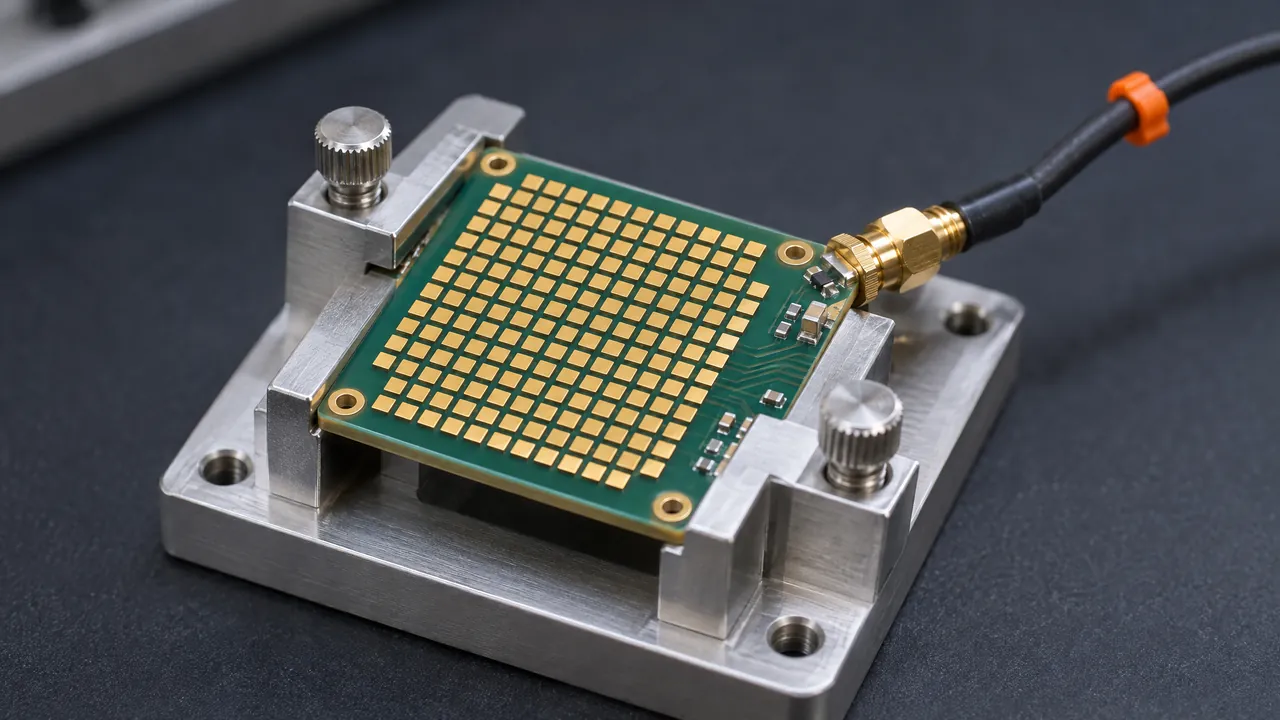
The technologies stitching this together deserve their own highlight reel. Ultra-massive MIMO stacks hundreds, on some occasions thousands, of tiny antenna elements into one coordinated swarm instead of a lone transmitter. Think of a marching band where every member redirects a trumpet blast independently, aimed straight at your phone as you stroll down the street. Intelligent reflecting surfaces push the idea further by turning plain walls and windows into passive relays that bounce signal around obstacles, and some of those surfaces double as sensors that map a room while they're at it. None of it runs without AI-native radio stacks reshuffling beams in real time, since no human engineer alive can hand-tune a million-element array fast enough.
The engineering headaches rival the breakthroughs. Squeezing that many radiating elements into a phone-sized chassis creates thermal problems that would make a laptop fan blush. Sub-THz signals get swallowed by rain, foliage, even drywall, so indoor coverage has grown into its own research subfield. Count on university labs producing gorgeous proof-of-concept demos years before any city sees blanket coverage, and somewhere in that gap there will absolutely be a paper titled something uncomfortably close to "Beamforming for Your Professor's Ego."
Tiny cells: the unglamorous workhorses of density
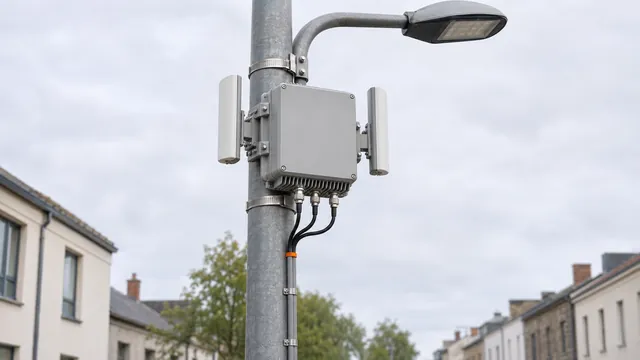
While 6G grabs the headlines, small cells quietly do the grunt work of keeping networks breathing in crowded places. These low-power nodes tuck into street lamps, mall ceilings, bus shelters, and vehicle roofs, delivering localized coverage where one giant tower would choke. A packed stadium or a dense campus quad needs dozens of these little workhorses rather than a single antenna screaming from a hilltop.
Deployment is messier than it looks. Interference between neighboring cells, backhaul capacity for all that traffic, and the logistics of bolting hardware onto somebody's private lamppost each turn into genuine puzzles. Here's a fun campus project: track latency, signal-to-noise ratio, and handover success rates across a mock small-cell deployment on university grounds. Watching handovers fail will teach you more than any textbook chapter ever did.
Hardware trends mapped against what we actually sell
Mobile signal antennas keep shrinking while getting smarter, with adaptive radiation patterns and integrated boosters that still play nice with legacy GSM bands nobody wants to admit are still around. Vehicle-mounted units live under different constraints than the antenna crammed inside your phone, so learning to read a spec sheet, gain figures, beamwidth, VSWR, beats memorizing marketing copy every time.
Wi-Fi antennas chase multi-band performance and beam-steering up into the 6 GHz range, with rugged outdoor housings built for long-range backhaul links across farmland or between campus buildings. The specialized crowd, GPS, IoT, and industrial kit, leans into low-power wide-area protocols like LoRa and NB-IoT, while anti-jamming features have become non-negotiable for anything navigation-related.
Then there's the stuff Jill won't stop nagging about: cabling losses, connector quality, mounting hardware. A gorgeous antenna wired with cheap cable is a tragedy waiting to happen. Before buying anything, check gain against your actual use case, confirm connector compatibility, and never skip the VSWR rating.
Antennas that moonlight as sensors
Antennas have started pulling double duty as sensors, using ordinary Wi-Fi signals to detect gestures, occupancy, even breathing patterns in a room. Researchers have converted commodity Wi-Fi chips into crude radar systems using channel state information, which is either brilliant or slightly creepy depending on your mood that day. Somewhere right now, a professor is itching to brag about using this exact trick to take attendance without a single raised hand.
Five things that will make a professor insufferably smug
Publishing a 6G channel model backed by real measurements. Demonstrating a sub-THz link punching through glass, or at least attempting it without blowing a fuse. Running a campus tiny-cell mesh with zero student complaints, which might be mythical. Using AI to crush handover failures down to near nothing. And yes, turning a Wi-Fi chip into an attendance-tracking radar, tongue firmly in cheek.
Lab projects worth your time
Build a simple directional antenna next to an omnidirectional one using an SDR and a spectrum analyzer, then compare gain and pattern data yourself. Simulate a tiny-cell deployment across a mock campus map and wrestle with the interference zones. Try a low-cost phased-array breadboard so beam steering happens under your own hands instead of inside a slideshow. Or take the sensor route and build an occupancy detector from Wi-Fi channel state information. Jill's sidebar advice stays blunt: start with a bowtie antenna and a spreadsheet, nothing fancier.
Skills worth stacking up
RF fundamentals, electromagnetic compatibility, CAD tools, and signal processing form your baseline. Machine learning literacy has crept into comms work fast enough that ignoring it is no longer an option. Past the technical toolkit, measurement discipline and the ability to explain your results clearly matter just as much, since bragging rights only count when you can back them up with numbers.
Three things worth remembering
6G is coming, slowly and messily, with lab demos arriving long before city-wide coverage. Tiny cells solve real problems while introducing their own tangle of interference and logistics headaches. And antennas increasingly do more than transmit; they sense, they localize, they moonlight as radar. Poke around the IMPAQ MSN spec guides if you want to keep learning past this page, no pop quiz required.