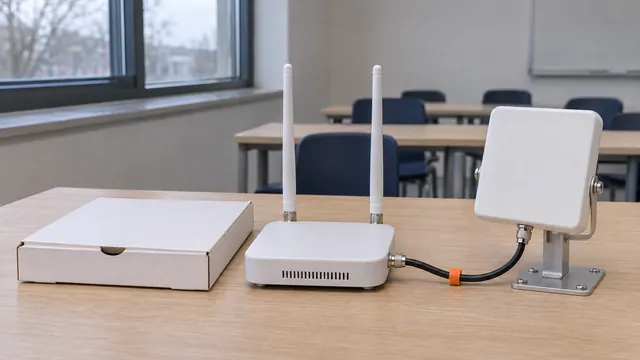
Here's a scenario for you. One pizza. A classroom full of hungry people spread all over the place. And Dave, out in the hallway three doors down, hollering that he's starving. So what do you do? Spin in a circle lobbing slices at everyone within reach, or fold the box into a chute and fire one slice straight down the hall at Dave's face? Congratulations, you've just grasped the entire omnidirectional versus directional antenna argument, minus the pepperoni casualties.
I spend an embarrassing chunk of my week thinking about radiation patterns, so let me explain all of this with food instead of Smith charts. We'll get into what antennas really do, the pizza definitions you won't be able to unlearn, the physics underneath, which antenna belongs in which job, and a handful of lab experiments that won't torch the chemistry wing.
So What Does an Antenna Do, Really?
Cut through the jargon and an antenna is a translator, plain and simple. Electrical signals go in one end and radio waves fly out, then radio waves come back in and turn into electrical signals again. That's the job. And here's what counts more than raw output: the shape of the energy pattern. Where do those waves actually go once they've left the antenna? The antenna is your delivery driver, and the signal is the pizza. A driver built like a linebacker means nothing if he's headed the wrong way down the street.
Pizza Logic: Omnidirectional Versus Directional
Now the fun part. Omnidirectional means coverage everywhere at once. Picture a chef planted in the middle of the kitchen, spinning a wheel of dough and flinging equal slices outward in a full 360-degree circle. Everybody eats, nobody eats especially well, and no slice travels far. Sketch the radiation pattern and you get a donut, or a squashed sphere hovering around the antenna. This is what lives inside your home router and most portable access points, and for good reason: most of us want decent signal all over the apartment, not a laser beam pointed at the fridge.
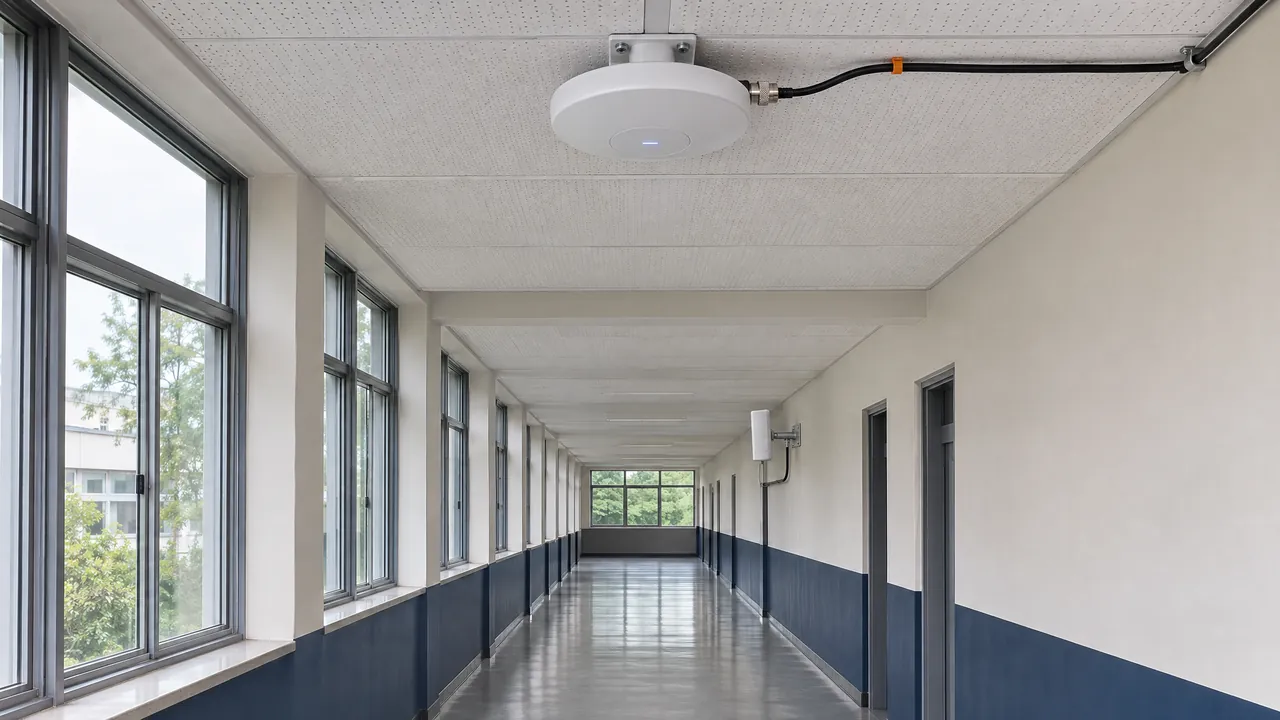
Directional flips the whole philosophy. Fold the pizza box into a chute, pick one target across the room, and launch a hot slice with genuine conviction. Coverage collapses into a beam, and that beam goes much farther and punches through obstacles far better than the spray-and-pray approach. On a radiation diagram you'll see a lobe, closer to a flashlight beam than a donut. Yagi antennas, panel antennas, and dish antennas all belong here, and they carry point-to-point links and long-range outdoor Wi-Fi on their backs.
Quick side-by-side, because I know you want bullets:
- Coverage pattern: omnidirectional spreads a circle, directional throws a beam
- Range: omnidirectional is modest, directional stretches much farther along its aim
- Use case: omnidirectional suits rooms and small offices, directional suits building-to-building links or a patio way out back
- Installation: omnidirectional is mostly plug-and-play, directional demands actual aiming and patience
And burn this into memory: trying to impress a friend across campus? Don't spin the dough. Aim the box.
The Physics, Made Edible
Two words will follow you everywhere in antenna talk: gain and beamwidth. Gain, measured in dBi, tells you how tightly you've crammed those slices into one direction instead of scattering them to the wind. Beamwidth is just the width of the pizza chute. Push the gain up and the beamwidth pinches down, which buys you range but makes aiming a much pickier affair. This tug-of-war between gain, coverage area, and the antenna's physical size never disappears. No antenna on earth blankets an entire gymnasium with a huge, narrow, long-range beam. Physics refuses to haggle.
Polarization gets a vote too. A pizza plate held flat behaves differently from one tilted on edge, and antennas follow the same logic, with vertical versus horizontal polarization deciding how well two antennas hear each other. Then reality piles on: walls, human bodies, microwave ovens, and every Wi-Fi network within a five-block radius all muddy your signal. One-line tip from your resident engineer: pull up the manufacturer's radiation diagram and stare at it before you buy anything. That one little picture tells you more than the spec sheet on the box.
Picking the Right Antenna for the Job
Mobile signal antennas, meaning 4G, 5G, and LTE setups, usually favor directional when you're locked onto one specific cell tower. Vehicles often run a directional antenna alongside an omnidirectional one inside the cabin, so everyone riding along gets bars. For Wi-Fi specifically, omnidirectional handles home and office access points without complaint, and directional takes over for outdoor point-to-point links or that stubborn patio at the far end of the yard. Specialized wireless antennas, think GPS, IoT, and industrial gear, lean heavily directional or call for a particular polarization, depending on what they're built to do. The buying logic never changes: match the antenna's pattern to your actual "who needs pizza" map.
A Tiny Decision Checklist
Ask yourself these things. Who needs coverage, and where exactly? Is there a clean line of sight to the target? Does anything need to stay mobile, like a car rolling down the highway? And be honest with yourself: are you willing to climb a ladder and aim gear, or do you want to plug something in and walk away? If aiming sounds like a chore, grab omnidirectional. Got a dead-straight shot at a distant building? Directional wins every single time.
Installing and Aiming Without Losing Your Mind
Elevation and a genuinely clear line of sight will make or break an outdoor directional setup. Secure the mounts, weatherproof the connections, and never skip hardware just because you're rushed. My favorite alignment trick: fire up a Wi-Fi analyzer app on your phone, have one person rotate the antenna slowly while another watches signal strength climb, and chase the strongest slice. Check RF exposure guidelines too, and triple-check the mounting hardware before you declare victory and walk off.
Classroom Experiments Worth the Effort
Try this one first. Grab a small omnidirectional whip and a directional patch antenna, walk away from each at measured intervals, and log the signal readings side by side. Or build a makeshift parabolic reflector from an actual foil-lined pizza box, aim it at a Wi-Fi dongle, and measure the extra range you squeeze out. Want something visual? Map signal strength across a classroom with an omnidirectional AP, then repeat with a directional antenna pointed at one wall, and compare the heatmaps. Feeling ambitious? Design a full network layout for a mock campus mixing both antenna types on purpose, like plotting a real delivery route for pizza. Document everything: screenshots, CSV logs, before-and-after photos.
Myths That Just Won't Die
Directional does not guarantee faster speeds. Alignment and interference decide that, and a badly aimed directional antenna will lose to a cheap omnidirectional one. Higher dBi isn't automatically superior either, not when your goal is wide coverage instead of a narrow beam. Troubleshooting? Check cabling and connectors first, confirm the polarization matches on both ends, clear the obstacles, verify firmware settings, and only then blame the antenna. If the pizza never arrives, check the driver's tires and your coax connectors.
Parting Thoughts
Reach for omnidirectional when everyone in a room or building needs coverage and nobody wants to aim anything. Reach for directional when you've got a clear target and real distance to cross. And never forget the gain versus beamwidth tradeoff, the tension sitting at the heart of every antenna decision you'll ever make. My pro tip: impressing someone with range takes aiming like you mean it, and always, always bring extra pizza.